Free shipping on coffee orders over 70€ in Italy Dismiss
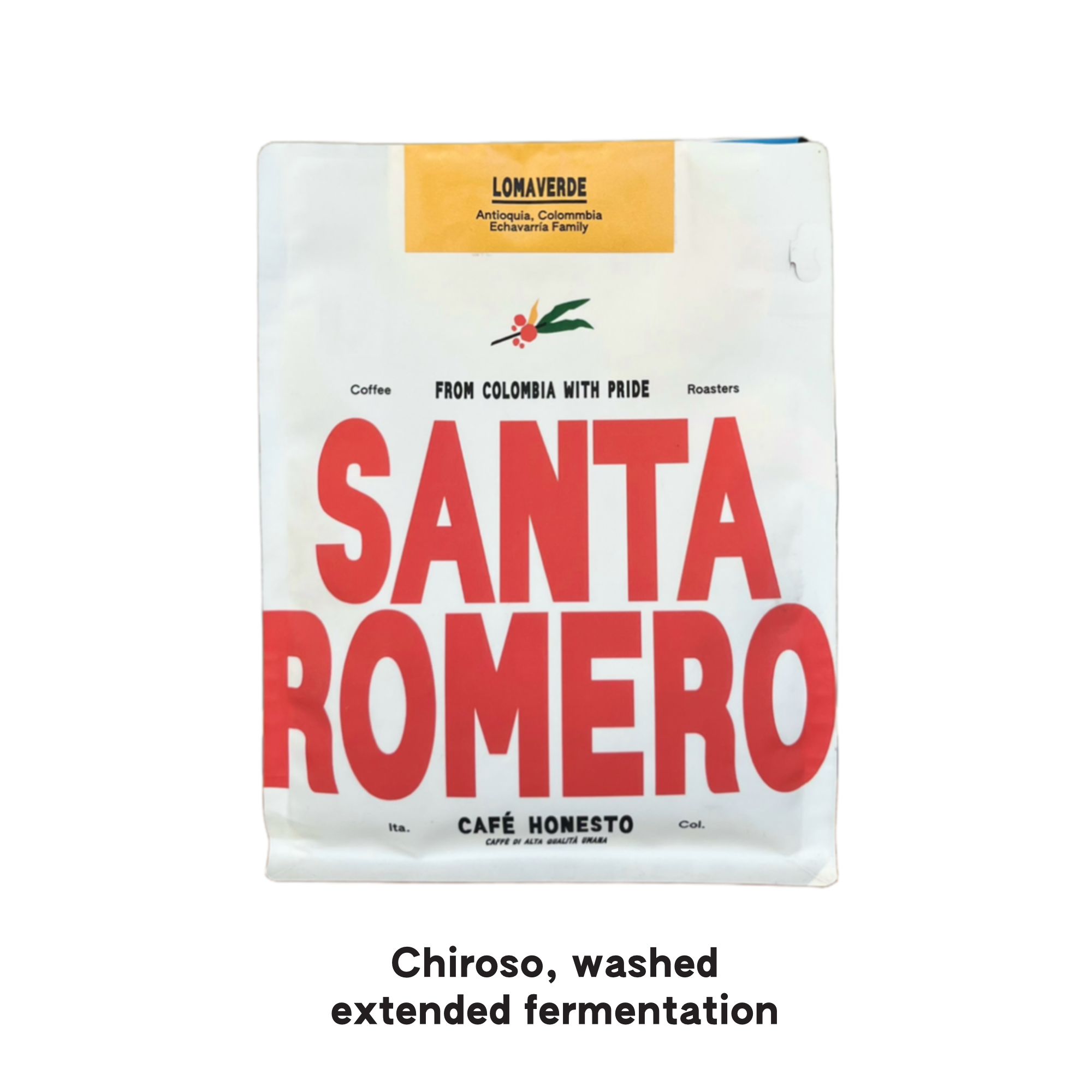
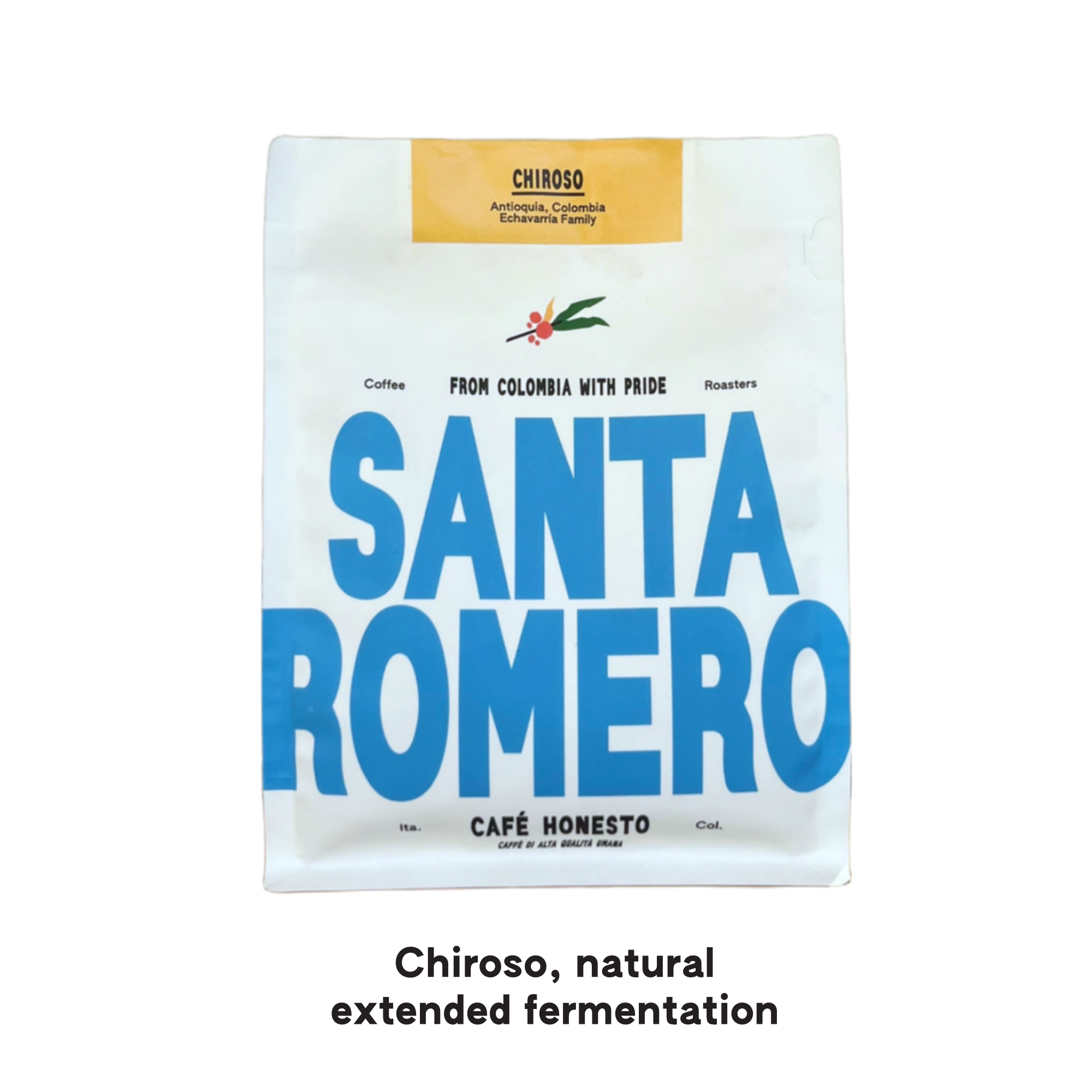
€16,90 – €57,00Price range: €16,90 through €57,00
Origin: Antioquia, Colombia
Producer: Echavarría Family
Variety: Chiroso
Process: Washed extended fermentation
Altitude: 1900 m
Harvest: April 2026
Aromatic profile: Rue plant, floral, macadamia
Our 2026 selection was all about Antioquia.
We spent time with our friend Leonardo Henao, from Finca El Jardín and Pergamino Coffee, diving into the region’s coffee genetics, farming practices, and processing techniques, and learning more about the work of the Echavarría family.
An opportunity to look beyond the cup and understand the people, the land, and the knowledge shaping the coffees we fell in love with.
Let’s get technical about genetics!
This variety was first identified in the town of Urrao, Colombia, and quickly gained popularity—not for its exceptional cup profile, which had yet to be discovered, but for its high productivity at low temperatures. It was named Chirosobecause of its elongated beans, and in recent years, it has gained recognition for its distinctive herbal notes.
There are two types of Chiroso plants: tall and short.
The shorter plants were locally known as Caturra Chiroso because of their resemblance to traditional Caturra plants, while the taller ones were referred to as Bourbon. However, genetic research has revealed that Chiroso is not closely related to the Typica family, but instead has a direct genetic relationship with Ethiopian landrace varieties. How it originally made its way to Colombia remains a mystery.
Process
Coffee cherries are selected at optimal ripeness, then floated to reduce the initial microbial load and fermented for 24 hours.
The cherries are then depulped, and water is added until the coffee is covered. Over the following three days, the coffee mass is mixed and water is added as needed.
Extended fermentation is rooted in the knowledge and experience of producers working at high altitudes. In these regions, lower temperatures slow down fermentation, requiring longer processing times to achieve optimal mucilage breakdown. This can promote the formation of secondary metabolites and enhance microbial activity, contributing to greater aromatic complexity in the cup.
However, extended fermentation also involves significant risks if critical variables such as temperature, cherry selection, initial microbial load, and pH are not carefully monitored and controlled.
For this micro-lot, two key variables were controlled: pH and temperature. Temperature is kept within an optimal range, while the pH of the coffee mass is adjusted by blending different batches, locally known as cochadas.
The technique combines two approaches: the batch-mixing method learned from Chiroso producers in Urrao, Antioquia, and the use of sack fermentation, a practice commonly employed in the high-altitude coffee-growing regions of Nariño.